Editorial field guide6 min readUpdated 3 October 2026
Contents and media references
Before the camera became wearable, filmmakers were already asking: can the lens become a person?
The catalogue includes film posters, a publicity still and a production featurette preview. These images identify the titles; the analysis below explains how each film uses perspective.
First-person cinema is a technique, not a genre. It can create intimacy, suspense, disorientation or a sense of physical presence. These films offer different answers: some sustain the character’s viewpoint, while others use it for a passage or an experience within the story.
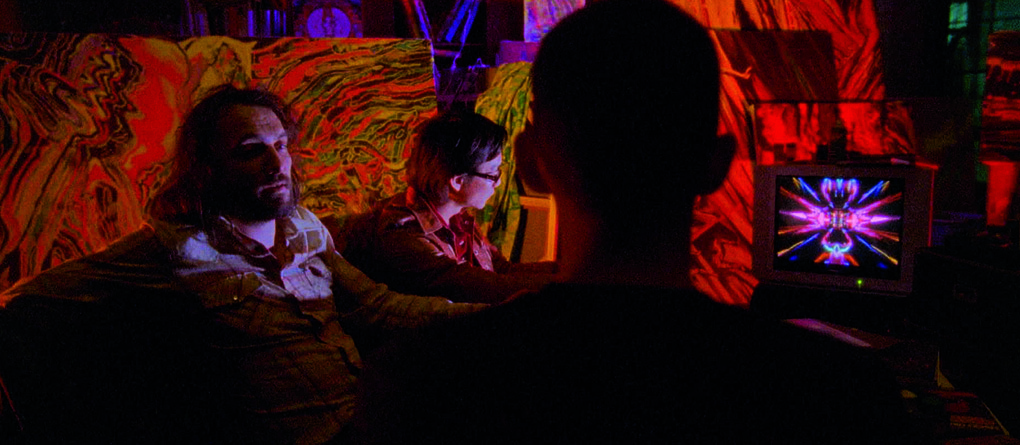
Enter the Void: subjective perception extends beyond a literal view through a character’s eyes. This is a distributor’s publicity still, not evidence of the full film’s camera rule. Image source: Transmission Films
First-person film examples
Poster via Wikipedia
Sustained POV · 1947
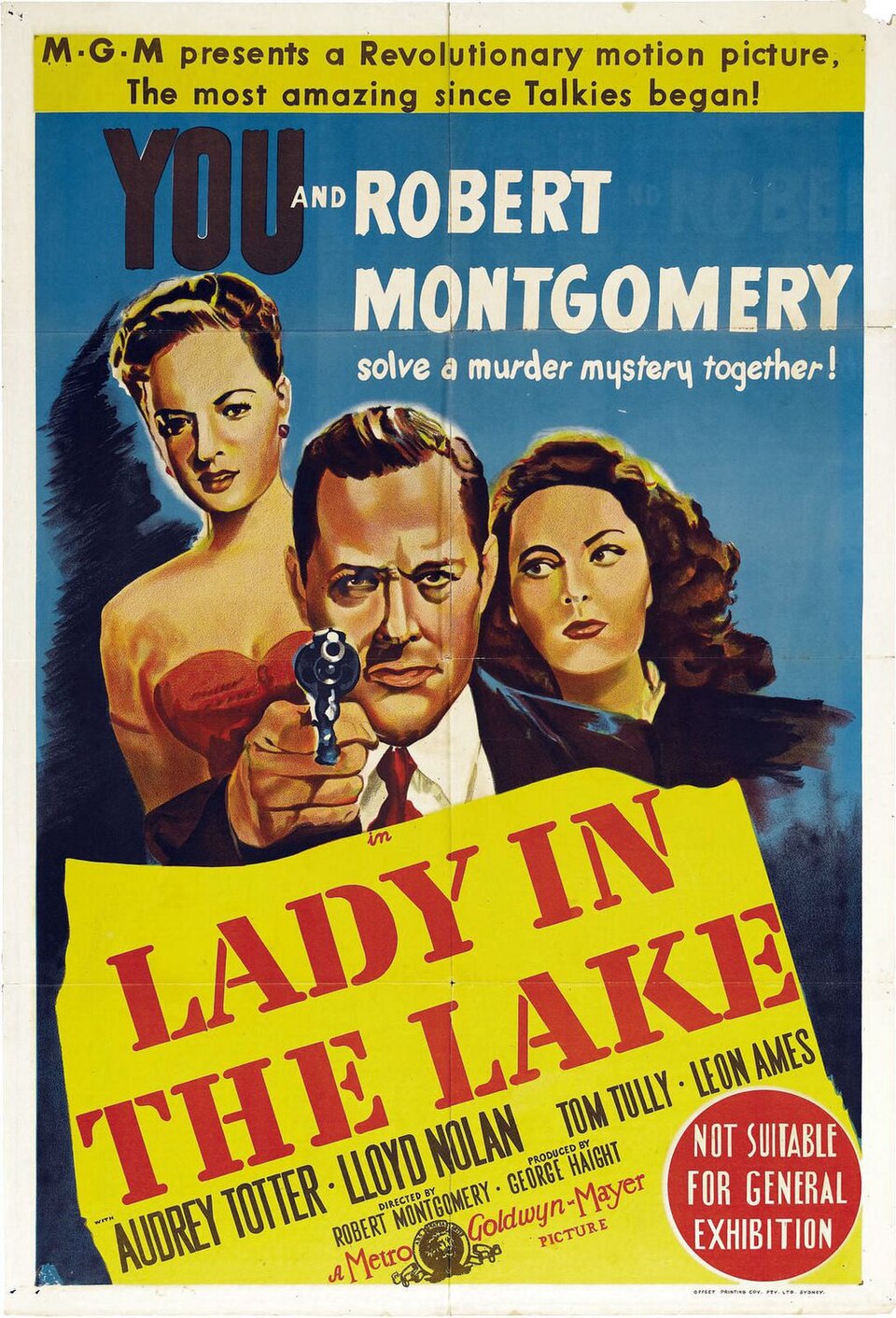
Lady in the Lake
Directed by Robert Montgomery
A detective story largely seen through Philip Marlowe’s eyes, with exceptions including direct-to-camera introductions. Faces address the lens; the protagonist becomes an unseen presence.
Watch for: how dialogue works when the reverse shot disappears.
Film context
Poster via Wikipedia
Extended sequence · 1947
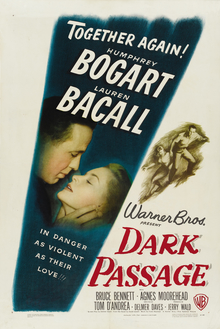
Dark Passage
Directed by Delmer Daves
The opening uses the fugitive’s viewpoint before the film moves into conventional coverage. It makes restricted vision part of the mystery.
Watch for: the moment a change of viewpoint changes your relationship with the character.
Film context
Poster via Wikipedia
POV sequences · 1995
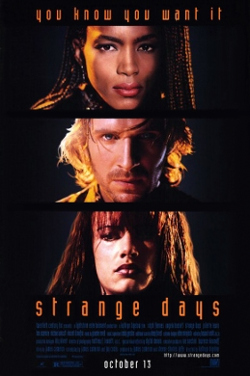
Strange Days
Directed by Kathryn Bigelow
Recorded experiences become something characters can replay. Its subjective sequences bring the idea of mediated memory into a thriller.
Watch for: how a recording can become evidence, temptation and a story within a story.
Film context
Poster via Wikipedia
First-person journey · 2002
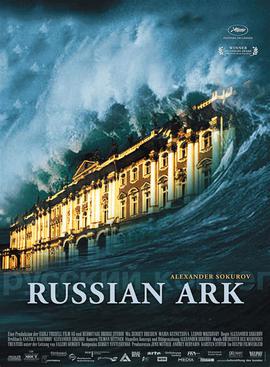
Russian Ark
Directed by Alexander Sokurov
An unseen narrator moves through the Winter Palace in one continuous shot. Perspective becomes a route through history rather than a conventional action scene.
Watch for: entrances, sound and movement guiding attention without cuts.
Film context
Film still: Transmission Films
Subjective / floating POV · 2009 / 2010
Enter the Void
Directed by Gaspar Noé
Oscar’s viewpoint opens into an out-of-body journey across Tokyo, memory and death. The film stretches subjectivity beyond the literal position of human eyes.
Watch for: shifts between embodied vision and a drifting, dislocated consciousness.
Film context
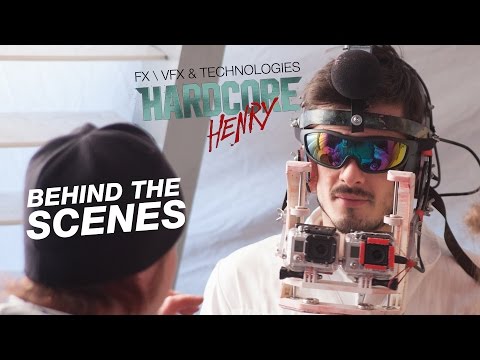
Production featurette: Cameraptor
Sustained POV · 2016
Hardcore Henry
Directed by Ilya Naishuller
An action feature filmed from its hero’s perspective. Physical movement and choreography carry the experience, with the audience placed inside the action.
Watch for: how hands, spatial cues and pauses make fast movement readable.
Film context
A selective study collection, not an exhaustive list. The catalogue combines credited film posters, a publicity still and a production featurette preview. Enter the Void premiered in 2009; BFI lists the 2010 release.
SOURCE MATERIAL / CLOSE READING
Screening note: the embodied action camera
Read the film catalogue alongside a production featurette published by Cameraptor, the film’s camera team. Compare the camera rig, performance and effects work with the finished subjective viewpoint.
Hardcore Henry: Technologies & VFX
Observe how a wearable camera rig and effects work support the film’s subjective viewpoint. This production featurette combines behind-the-scenes footage and edited film material; its own camera is not continuously first-person.
Video: Cameraptor · 2016
Select a preview to play the video here.
How to study a first-person movie
Start by asking what the camera claims to represent. Is it a character’s eyes, a recording device, a memory or a disembodied presence? Then identify the exceptions. A film can be strongly subjective while occasionally using an external shot. The collection above labels those differences because the formal rule matters more than whether a title is casually described as a “POV movie”.
Lady in the Lake: dialogue becomes an encounter
When a character addresses a subjective lens, their gaze points directly towards the audience. Study the distance between the speaker and camera, the pauses in the exchange and how another person’s response implies the protagonist’s behaviour. Without a conventional reverse shot, voice and timing have to carry much of the unseen character’s presence. Ask what you understand about the detective from those interactions alone.
Dark Passage: a change in viewpoint can mean something
A film does not have to remain first-person throughout to use the technique effectively. An extended subjective passage establishes a particular relationship between the audience and the protagonist. Moving to external coverage can then change that relationship. For a wearable production, the practical lesson is to make a supporting shot purposeful rather than insert it simply because the same camera angle has lasted a long time.
Strange Days: a recorded experience inside another story
A recording can serve as evidence, desire or an unreliable fragment of another person’s experience. That gives a subjective sequence two audiences: the character consuming it and the person watching the film. When developing an AR or wearable-camera concept, decide whether the captured material is the story itself or something that changes a story unfolding around it.
Russian Ark: the route becomes the structure
A long journey through space can replace some of the organising work usually done by cuts. Entrances, exits and changes in sound give the audience new expectations. Study how movement prepares the next encounter. For a gallery route, test whether each transition reveals a new question or whether the visitor is simply travelling between disconnected explanations.
Enter the Void: subjectivity beyond literal eyesight
The camera’s relationship to a person’s experience can be psychological rather than anatomical. A drifting view suggests a different condition from an embodied view with visible hands. Describe that distinction when discussing a concept. Calling every unusual moving camera “first-person” can hide the creative choice that makes the sequence distinctive.
Hardcore Henry: action needs readable space
For a practical study, track how you recognise a destination, another body or an obstacle before an action occurs. A POV sequence can be energetic while still giving the audience enough spatial information to follow it. Try the same principle in a low-risk task such as moving an object between workstations. Establish the destination before the movement and let the result settle afterwards.
More examples of selected POV sequences
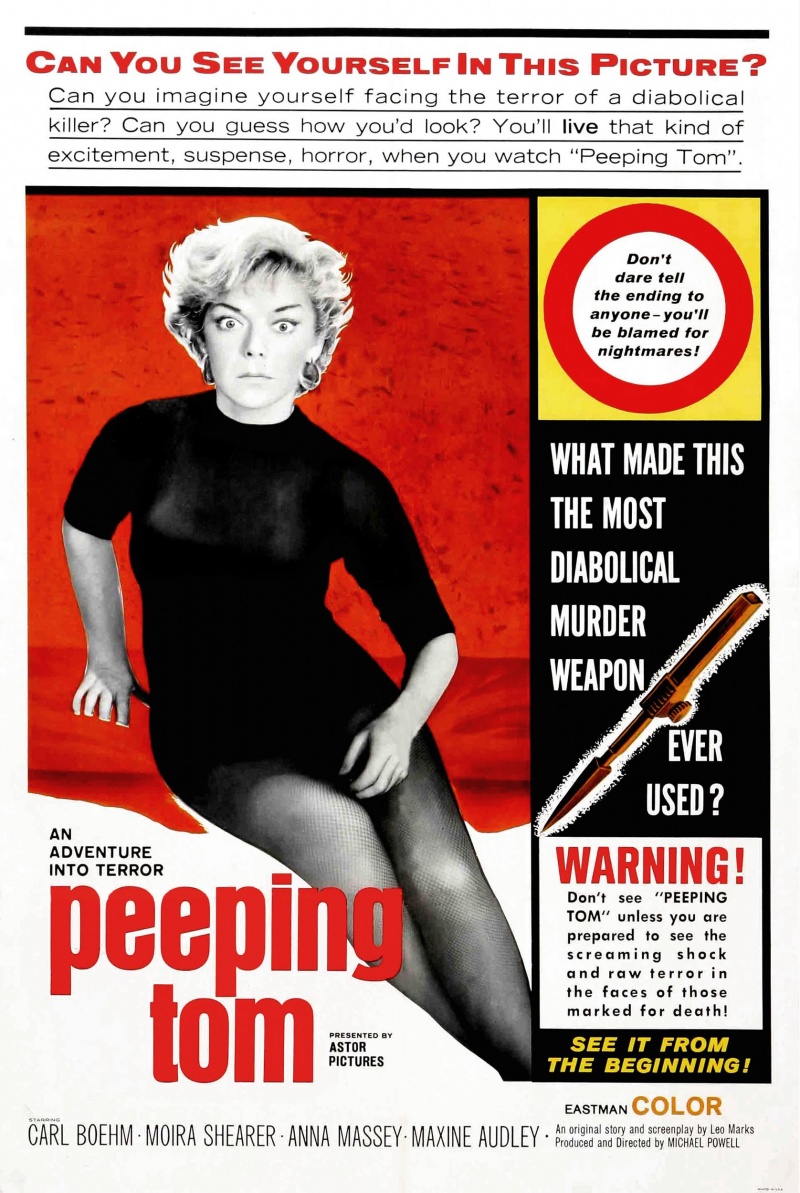
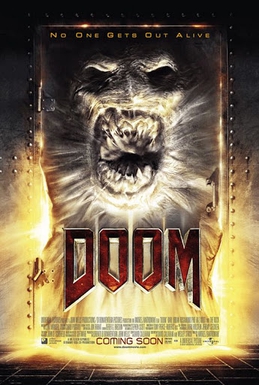
Peeping Tom (1960) uses the camera as part of its subject. Doom (2005) includes a first-person action passage. These are references for selected sequences, not additions to the sustained-POV collection. Vue’s overview of POV cinema provides further context.
Peeping TomPoster via WikipediaDoomPoster via Wikipedia
A comparison exercise for a filmmaker
Choose a short encounter, such as receiving a mysterious parcel. Plan it once from the recipient’s eyes and once with external coverage. In the first version, let the sender’s behaviour and the recipient’s hands communicate suspicion. In the second, use a reaction shot and a wider view. Compare what the audience learns, when they learn it and how close they feel to the recipient. The exercise makes perspective a narrative decision rather than a camera accessory.