Editorial field guide7 min readUpdated 3 October 2026
Contents and media references
In VR, perspective is connected to your head, your hands and your sense of personal space.
Half-Life: Alyx is a strong reference for narrative in VR: the story is staged around a participant who can physically look, reach and respond.
A first-person game on a screen gives you a camera. VR adds tracked movement, scale and an embodied relationship to the space. A character approaching you can feel different from a character approaching an image. A small action, opening a drawer, handing over an object or leaning around a corner, can become part of the drama.
Half-Life: Alyx and embodied storytelling
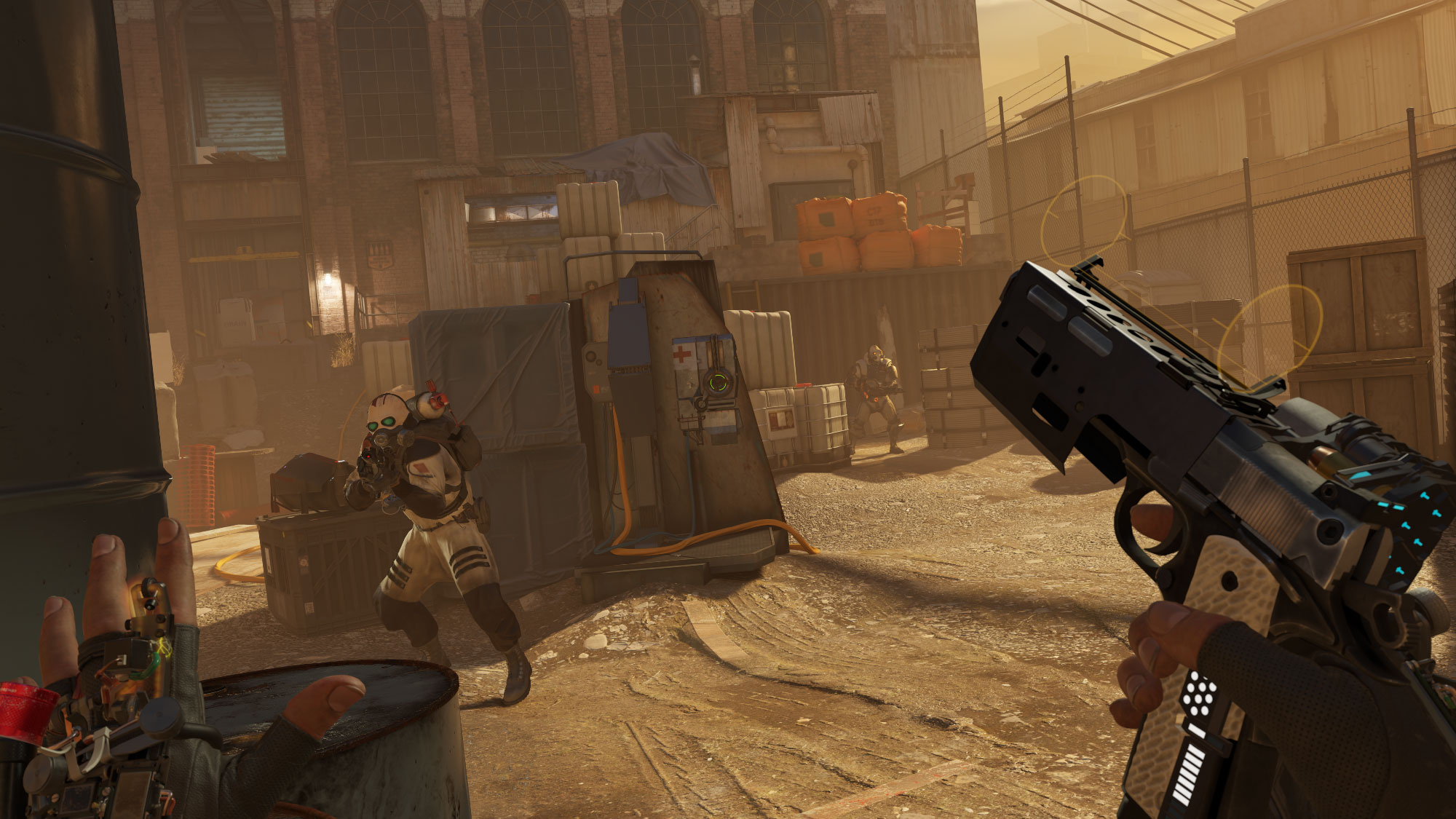
Half-Life: Alyx places tracked hands and environmental action within the participant’s view. This official game screenshot is a virtual scene, not footage from camera glasses. Image source: Valve FIRST-PERSON VR CAMPAIGN
Half-Life: Alyx
Set between Half-Life and Half-Life 2, Valve’s VR campaign places you in Alyx Vance’s role in the struggle against the Combine. Physical interaction is central: you search spaces, manipulate objects and use your hands to act within the world.
For narrative design, study how encounters remain at the participant’s scale. Dialogue, environmental detail and practical tasks can carry a scene while you remain present in it. The character you embody can change in the final story material, so embodied first-person and one unchanged protagonist are separate ideas.
Recognition: winner of Best VR/AR at The Game Awards 2020, and nominated for Best Game at the 2021 BAFTA Games Awards.
Valve’s official game overview BAFTA’s 2021 results The Game Awards 2020 winners
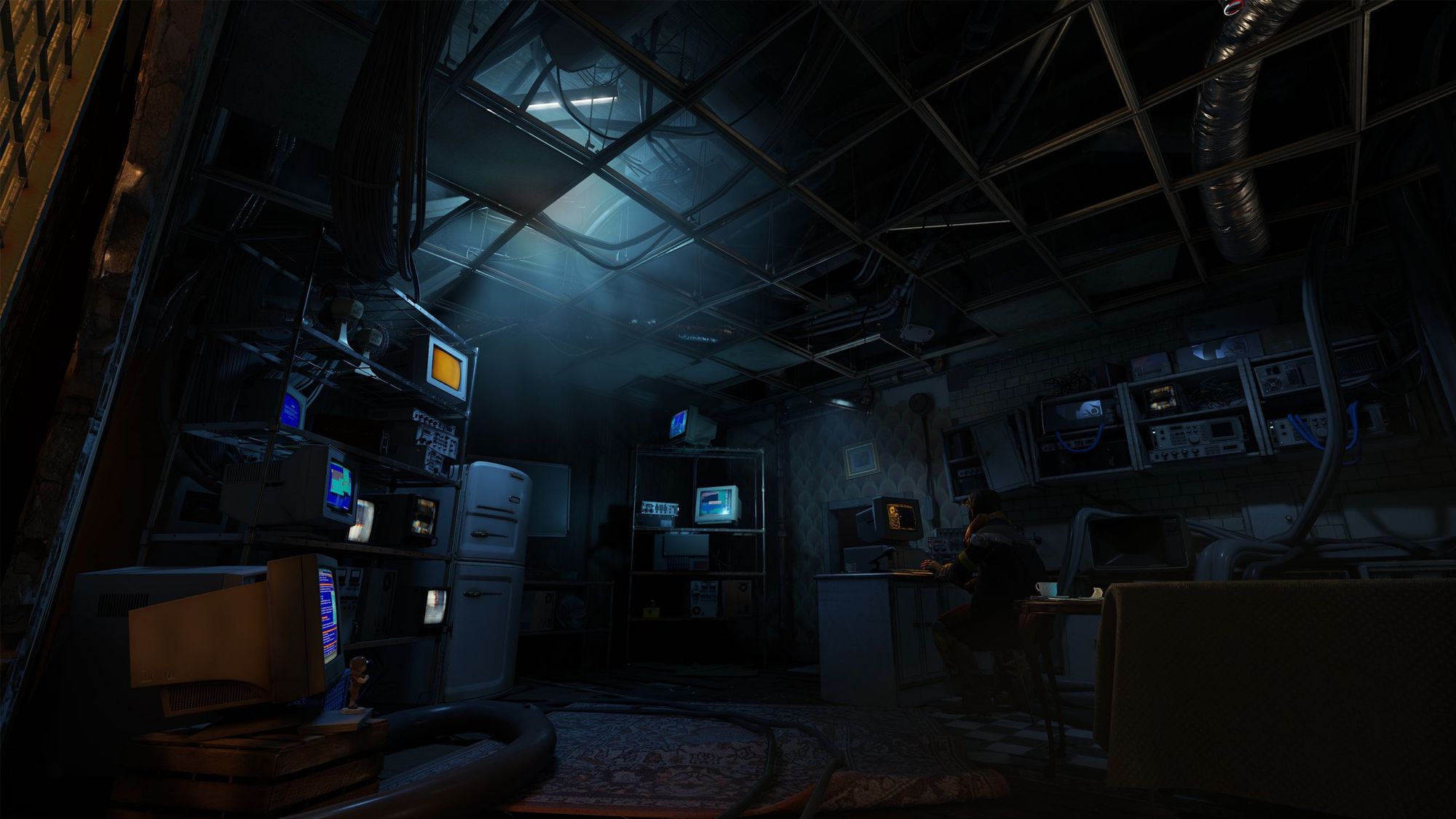
Environmental storytelling in Half-Life: Alyx. The arrangement of objects, light and equipment can suggest history before a character explains it. Image source: Valve
Other ways to be present.
Recognised references for narrative craft in VR. These are not all strict first-person camera studies.
READY AT DAWN / 2017 & 2021
Lone Echo & Lone Echo II
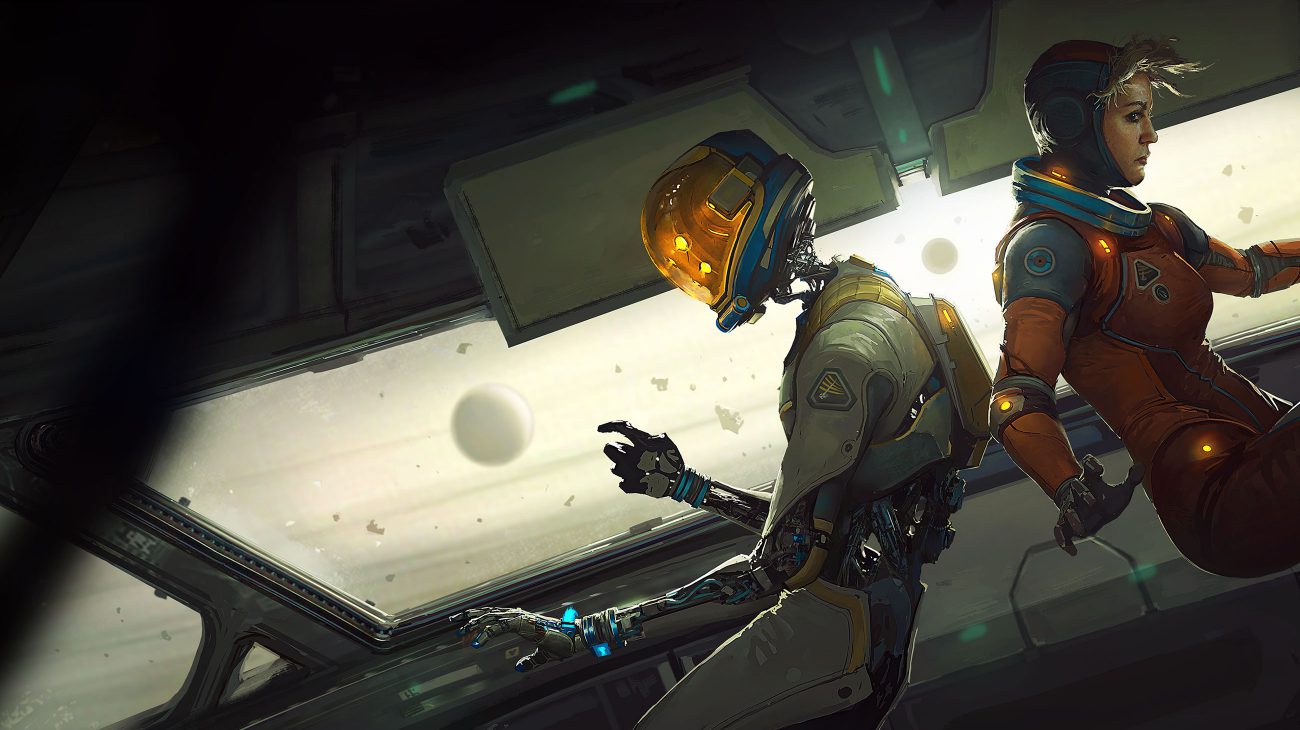
Lone EchoArtwork: Ready At Dawn / Oculus StudiosLone Echo IITrailer preview: Meta Quest / Ready At Dawn
EMBODIED FIRST-PERSON
You inhabit Jack, a service android, alongside human companion Liv. Zero-gravity movement and hands-on tasks turn the relationship into something experienced through proximity and shared activity.
STUDY THE RELATIONSHIP
Consider how eye contact, distance and collaboration make a companion feel present. Physical interaction can carry emotional meaning as well as solve a puzzle.
Ready At Dawn’s GDC presentation on Lone Echo VERTICAL ROBOT / 2022
Red Matter 2
Screenshot: Vertical Robot
FIRST-PERSON MYSTERY
A narrative science-fiction adventure built around exploration and discovery. As agent Sasha Riss, you follow a signal through stations and abandoned facilities, piecing together what happened.
STUDY THE ENVIRONMENT
An object or room can become evidence. The player’s investigation sets the rhythm of revelation, making attention and curiosity part of the narrative.
Vertical Robot’s official overview POLYARC / 2018 & 2022
Moss & Moss: Book II
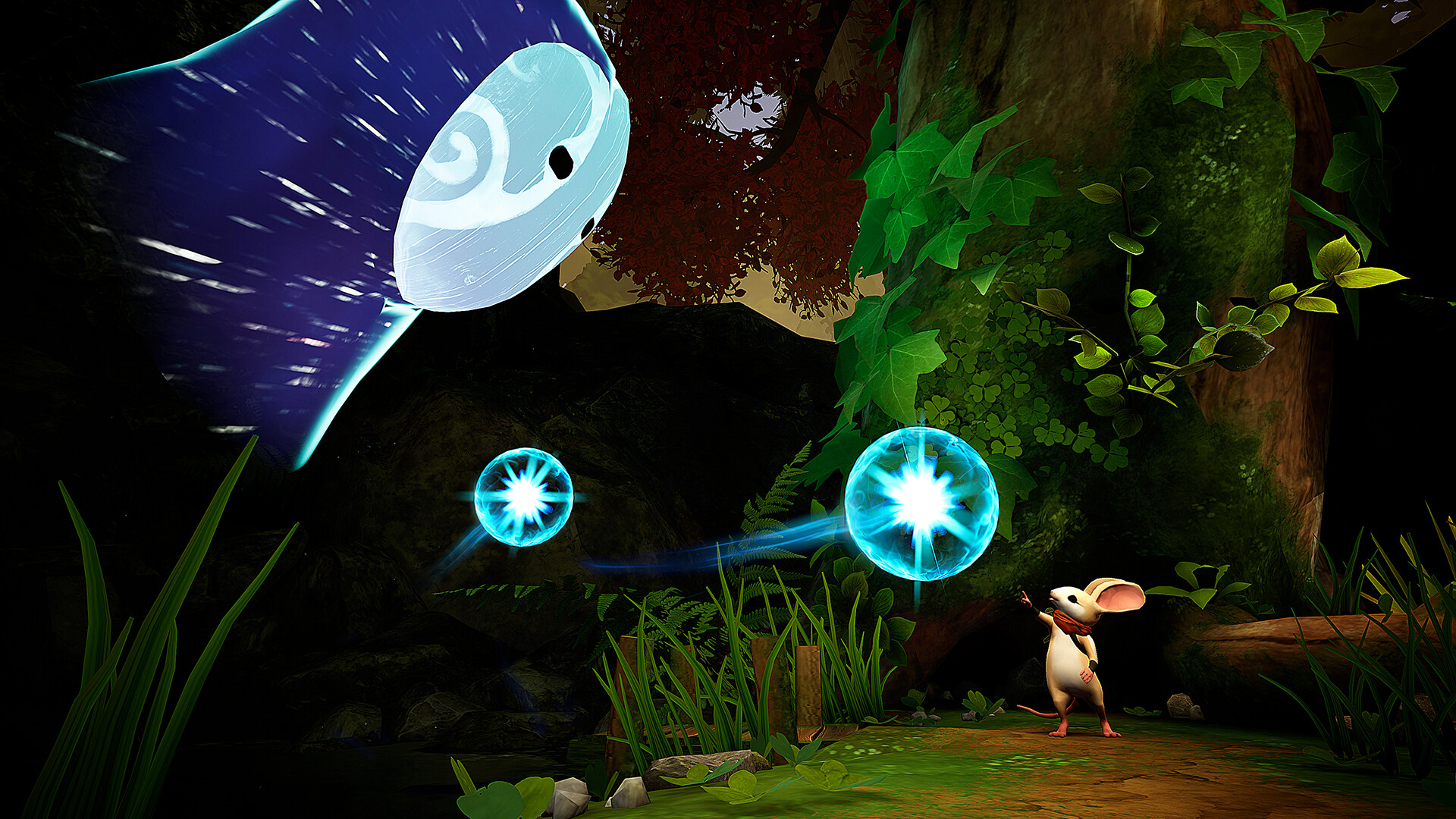
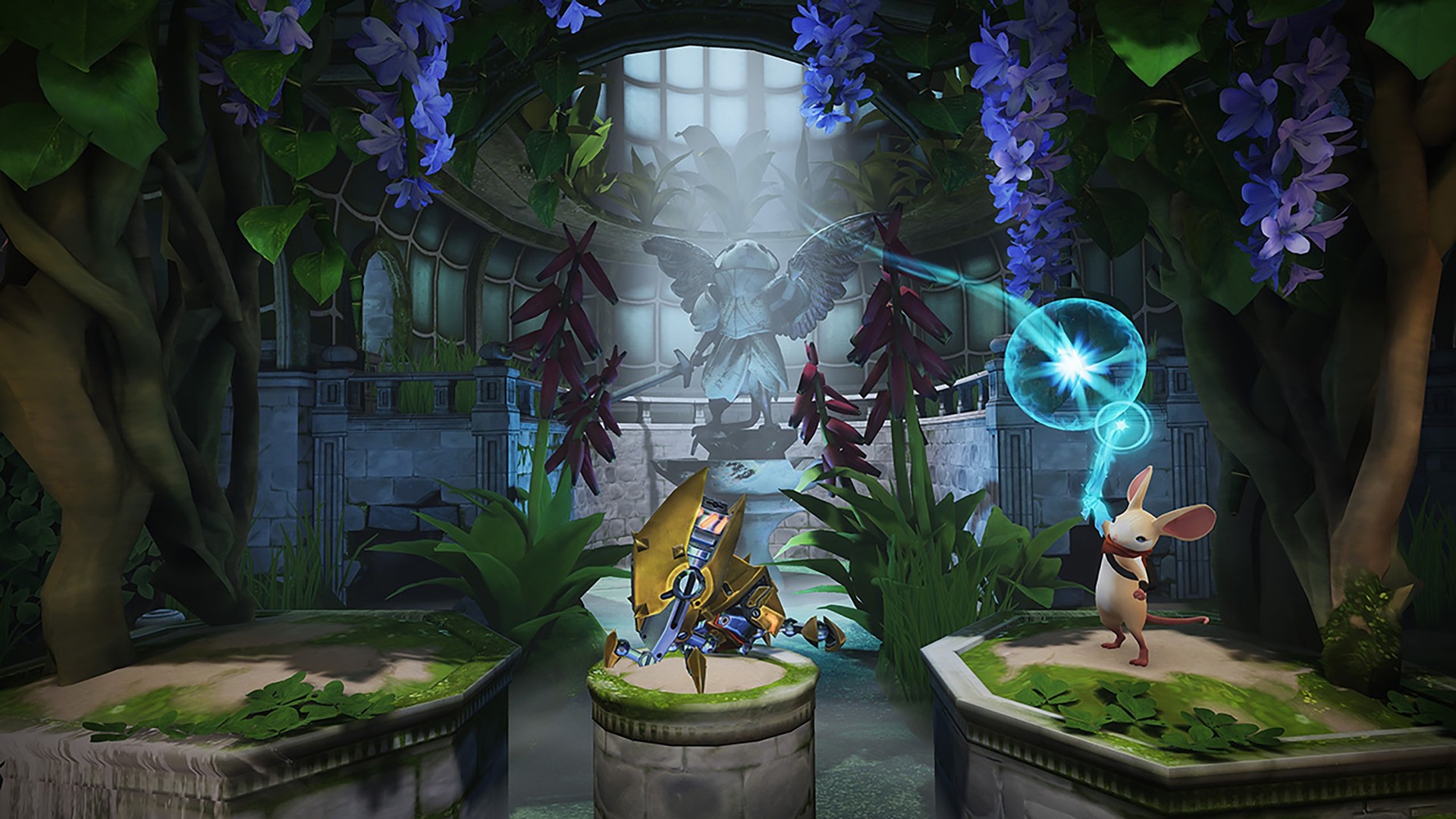
MossScreenshot: PolyarcMoss: Book IIScreenshot: Polyarc
PLAYER AS READER / OBSERVER
You help Quill, a small mouse with her own journey. The player is present as the Reader while Quill remains a visible character in the world. This is a useful counterpoint to inhabiting a protagonist’s eyes. Moss: Book II won Best VR/AR at The Game Awards 2022.
STUDY THE DOUBLE PERSPECTIVE
VR does not require every story to be told through the hero’s eyes. An observer can still form a relationship through gestures, assistance and shared space.
Polyarc on world and camera design The Game Awards 2022 winners
A selective narrative study collection. The images include publisher screenshots, promotional artwork and official trailer previews. Game and platform requirements should be checked with the publisher.
SOURCE MATERIAL / CLOSE READING
Three approaches to narrative presence
Compare embodied action, an observer’s relationship with a visible character, and memory shaped through a bodily input. Each example uses VR differently.
Half-Life: Alyx announcement trailer
Look for the relationship between hands, objects and personal space. Compare interaction in the virtual world with the edited presentation used to introduce it.
Video: Valve · 2019 Moss: Book II launch trailer
Observe the distance between the participant and Quill. VR presence can create a close narrative relationship while the playable character remains visible from outside.
Video: PlayStation · 2022 Before Your Eyes: PS VR2 trailer
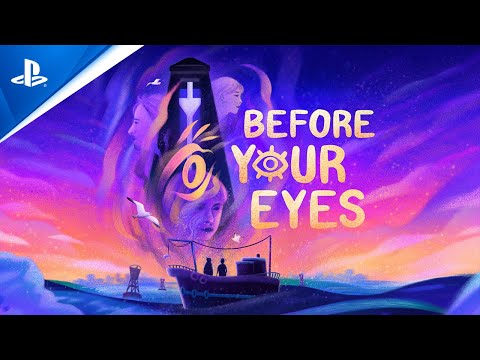
Consider how blinking becomes an input and how memory is organised around the participant’s attention. An embodied narrative does not need the structure of a first-person shooter.
Video: PlayStation · 2023
Select a preview to play the video here.
More story-driven VR games to study
A narrative VR collection should include different forms of participation. Inhabiting a protagonist, accompanying a character, discovering an environment and observing an ensemble all produce different relationships to a story. The following examples extend the collection beyond action campaigns. They are references for narrative design, not a promise that every game follows one unbroken first-person camera rule.
Before Your Eyes: a blink becomes a story action
PS VR2 trailer preview: PlayStation
The PS VR2 version of Before Your Eyes uses real blinking to control movement through a life remembered. The interaction connects the passing of a moment to an involuntary physical action. It is a useful example of a mechanic that supports a theme rather than simply providing another way to select a menu option. PlayStation’s game overview explains the VR adaptation.
For a design exercise, ask whether an interaction has an emotional meaning as well as a technical function. Opening a hand can release something. Turning away can avoid an encounter. Holding an object can delay a decision. These are proposed creative directions, and each needs testing for clarity, comfort and accessibility rather than assuming all participants will interpret the action alike.
The Walking Dead: Saints & Sinners: choices inside a physical world
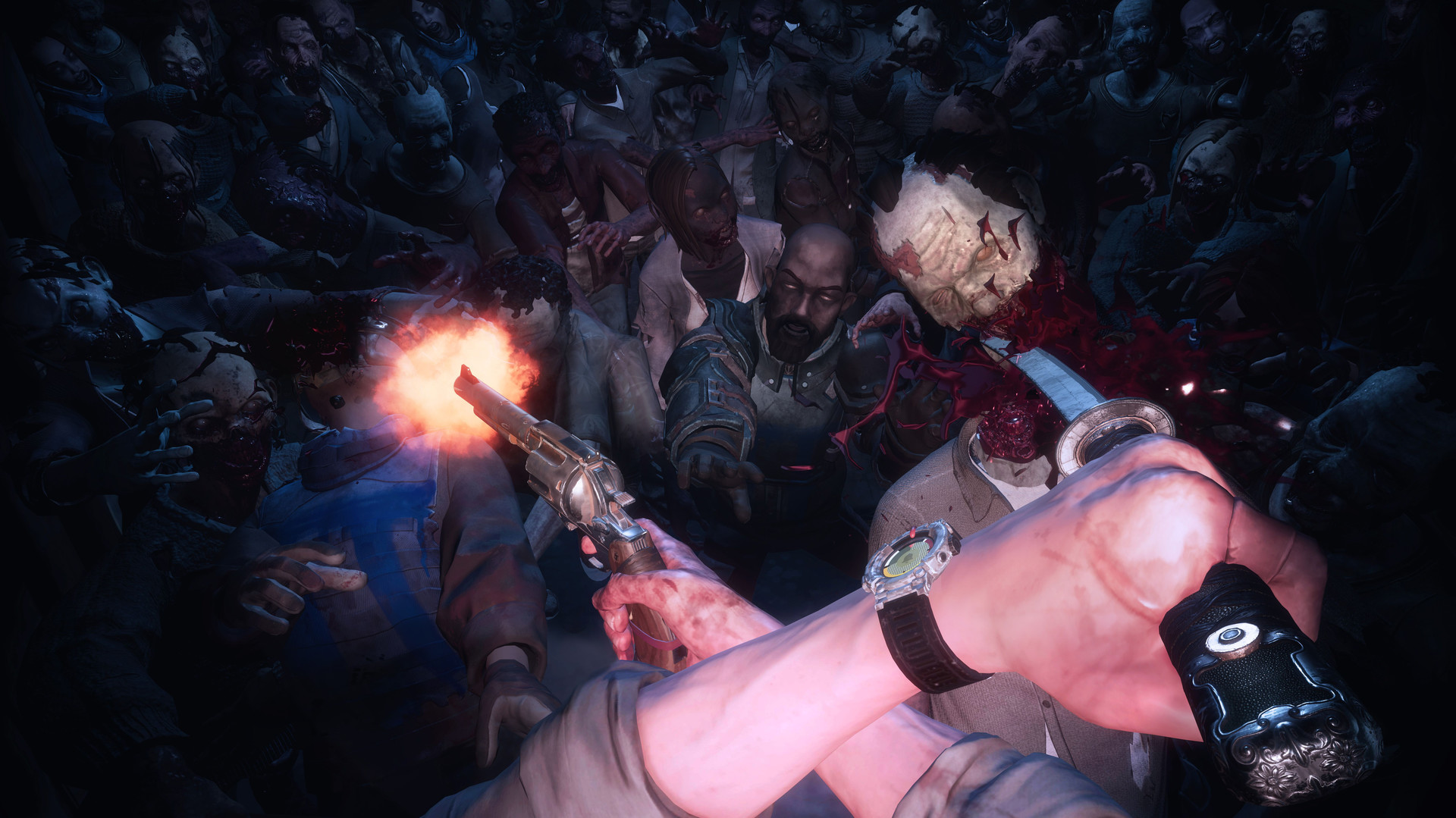
Screenshot: Skydance Interactive
Skydance’s game places scavenging, survival and decisions about other survivors inside a first-person VR experience. Its narrative interest is not limited to dialogue selection. What the player does, carries and risks can become part of how a situation feels. Skydance’s official description sets out its focus on choices and consequences.
Study the relationship between practical pressure and a moral decision. A scene may feel different when a player has just spent time securing resources or navigating a threatening environment. In an installation, a smaller equivalent might ask a participant to decide what to preserve after carefully assembling something. Avoid treating effort alone as proof that the choice is meaningful; the consequences still need to be understandable.
The Invisible Hours: a story you observe from different places
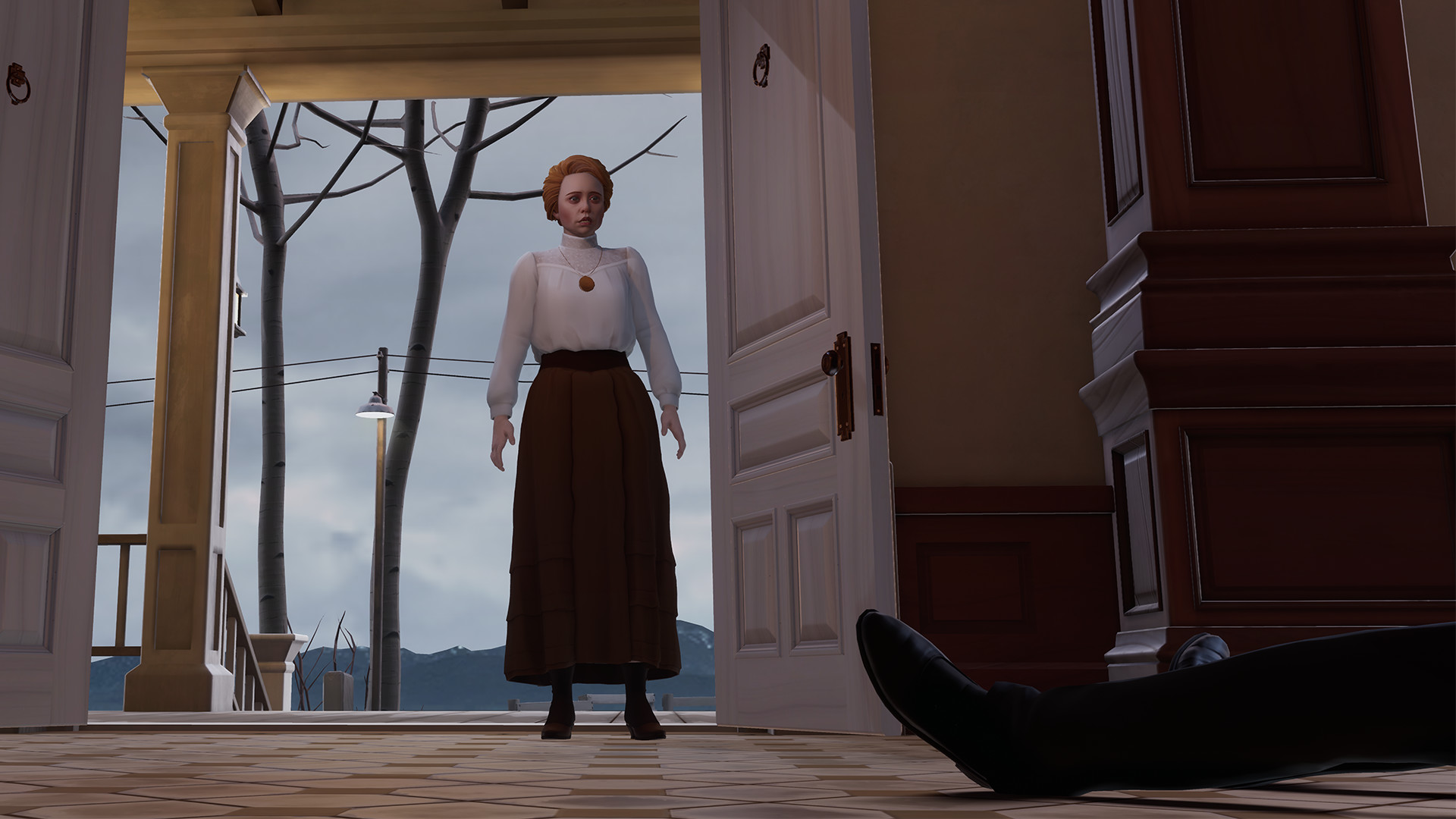
Screenshot: Tequila Works / GameTrust
Tequila Works describes a “spherical” narrative built from overlapping character stories. The participant observes rather than acting as the central hero. This makes it a valuable contrast to Half-Life: Alyx. The question becomes whose scene to follow and which information to assemble from simultaneous events. The developer’s account of spherical storytelling explains the approach.
A small prototype could stage two conversations in adjacent spaces. Let the participant follow either one, then provide a reason to reconsider what they heard. Test whether the second perspective adds understanding instead of merely repeating information. An observer’s freedom needs a narrative structure that can survive a different order of discovery.
How to compare VR narrative techniques
Record four observations for each reference: the participant’s role, the action they perform, the way attention is guided and the consequence of missing a detail. Separate embodied first-person stories from observer experiences. Compare how a game introduces another character and how it communicates that the character has noticed the participant.
Think about the recording as a separate audience
A headset user can look around, feel scale and move their hands. A person watching a flat video receives only the selected capture. A trailer or walkthrough may need supporting views, captions or a calmer edit to communicate the experience. Explain which version is being shown, and avoid presenting a flat recording as equivalent to being physically present.
Start with one room, one character and one object. Give the participant a clear reason to enter, then let the character ask for a simple action that reveals a detail about their relationship. The action could involve placing a letter on a table or choosing where to sit. These are development examples, not features attributed to the games above.
Observe how a tester finds the character, understands the invitation and recognises the result. Test both a seated and a standing encounter where the prototype supports them. Provide an alternative to an interaction that depends on a narrow range of movement. If the essential story is understandable only after a spoken explanation from the developer, revise the scene rather than treating confusion as part of immersion.
The exercise connects presence to a narrative purpose. It also gives a project team something concrete to evaluate before building a large environment. Record a short demonstration, but explain the difference between watching the recording and participating in the spatial experience.