Editorial field guide10 min readUpdated 3 October 2026
Contents and media references
First-person play. Third-person drama. What changes when a game hands the camera to a director?
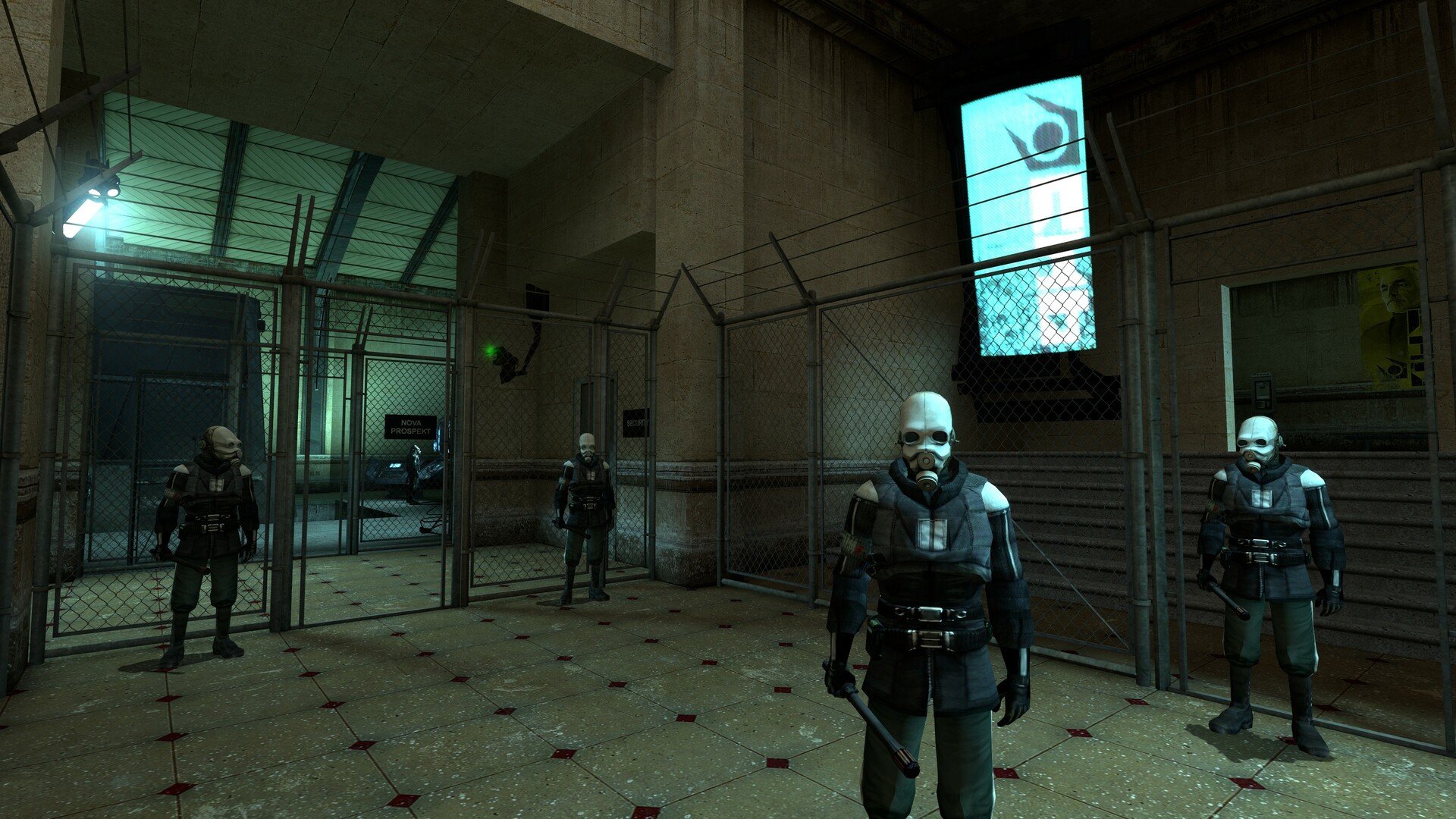
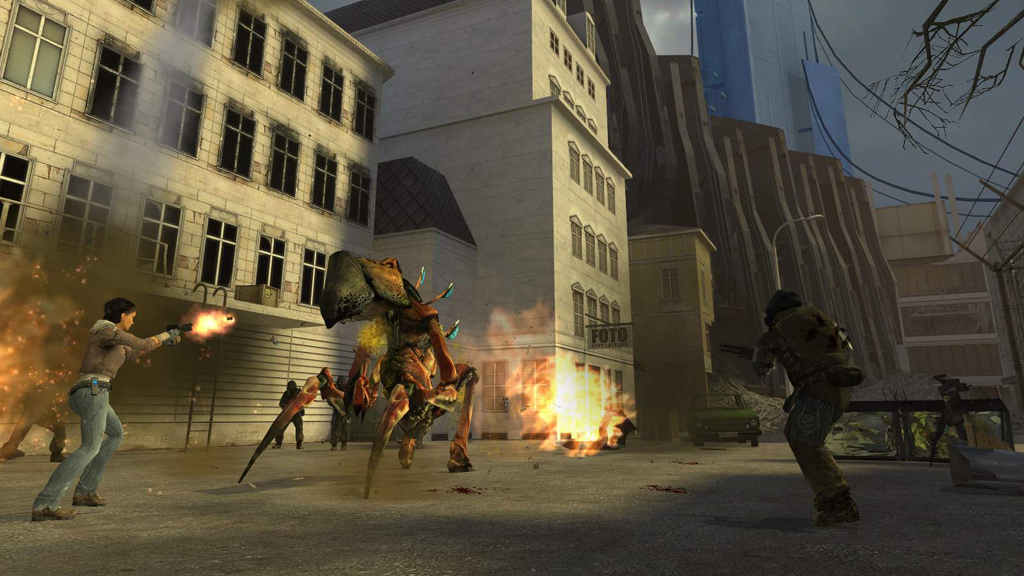
Half-Life 2: characters and architecture stage an encounter directly in the game world. Study attention, proximity and the information visible to the player. Image source: Valve
FROM PLAYER TO SPECTATOR
A common pattern in first-person games is to step outside the character for a cutscene. The camera changes because the storytelling job changes.
During play, the camera helps you aim, navigate and act. During a dramatic scene, a director may want you to read your character’s expression, understand a relationship or see an event beyond their immediate field of view. A third-person camera gives the scene those options.
It is a creative tradeoff: clearer performance and controlled framing can come at the cost of the feeling that you are continuously inside the character. The examples below take the other route, staging their campaign narratives from within the protagonist’s viewpoint.
Why first-person games use third-person cutscenes
01 / PERFORMANCE
See the reaction.
A close-up can show a protagonist’s fear, hesitation or grief. A reverse shot lets the audience read both sides of a conversation. First-person direction has to communicate that response through voice, hands, movement or the other character’s performance.
02 / COMPOSITION
Make the moment clear.
A wide shot can establish positions; an insert can reveal an important object. The director can control the order and duration of those images, rather than risk the player looking elsewhere when a key action happens.
03 / KNOWLEDGE
Show more than one person knows.
A cutaway can reveal an antagonist’s plan or a danger the protagonist has not noticed. A strictly first-person narrative limits information to what the character can experience, discover or be told. That restriction can also become a source of suspense.
04 / CHARACTER & SPECTACLE
Stage a character’s story.
An external shot presents the protagonist as a person with a body, identity and relationships. It can also make complex choreography easier to read. Staying first-person places the emphasis on how an event feels from inside that body.
These are narrative design tradeoffs, not a measured claim about the proportion of games using each technique.
Design analysis: communicating character in first-person Ken Levine on the tradeoff between performance and immersion
Staying inside the story.
Non-VR campaigns that keep their staged narrative scenes in first-person.
The rule for this collection
The player’s narrative viewpoint stays inside the character during the campaign’s action, dialogue and staged story scenes, including the ending. Menus, credits, reflections and documents viewed by the character are not external dramatic cutscenes. A fade or time jump can still be first-person. VR titles are excluded; editions, adaptations and DLC are not automatically covered.
01 / 1998FIRST-PERSON STORY
Half-Life
Valve · Through Gordon Freeman’s eyes
Artwork: Valve
Story unfolds around you
The opening tram ride, encounters, scripted crises and closing exchange stay with Gordon’s viewpoint. Rather than cutting to a separate cinematic camera, the game stages events inside the space you occupy.
THE STORYTELLING LESSON
A scene can guide your attention without taking you outside the character. Movement, sound and another person’s gaze become the direction.
Valve’s design presentation
02 / 2004FIRST-PERSON STORY
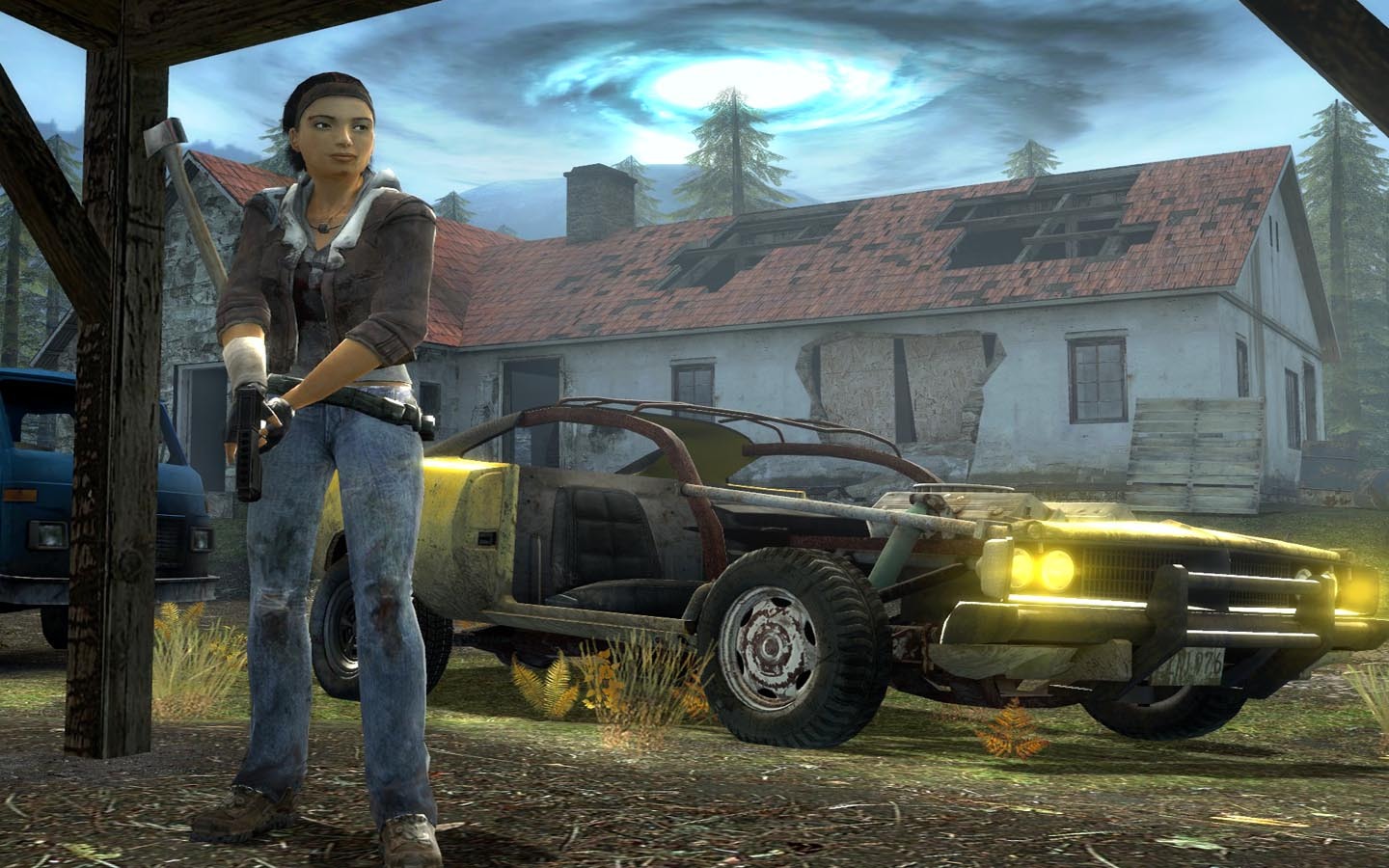
Half-Life 2
Valve · Through Gordon Freeman’s eyes
Screenshot: Valve
Drama without a reverse shot
Conversations, introductions and major dramatic sequences are presented from Gordon’s eyes. The same approach continues in Episode One (2006) and Episode Two (2007). First-person does not mean uninterrupted control: the story can still restrain or immobilise you.
THE STORYTELLING LESSON
Characters perform towards your position. The player becomes the missing reverse shot in the conversation.
Interview with Valve’s lead writer
03 / 2013FIRST-PERSON STORY
BioShock Infinite
Irrational Games · Through Booker DeWitt’s eyes
Artwork: Irrational Games / 2K
A voiced character, seen from within
The base campaign carries its dialogue, scripted encounters and climactic story scenes through Booker’s viewpoint. It can restrict movement or direct the camera while remaining first-person. This is closer to Cyberpunk’s acted scenes than a silent-protagonist approach.
THE STORYTELLING LESSON
First-person can support a defined, speaking protagonist. Intimacy comes from how another character responds to you, not from seeing your own face.
Ken Levine on first-person storytelling
04 / 2013FIRST-PERSON STORY
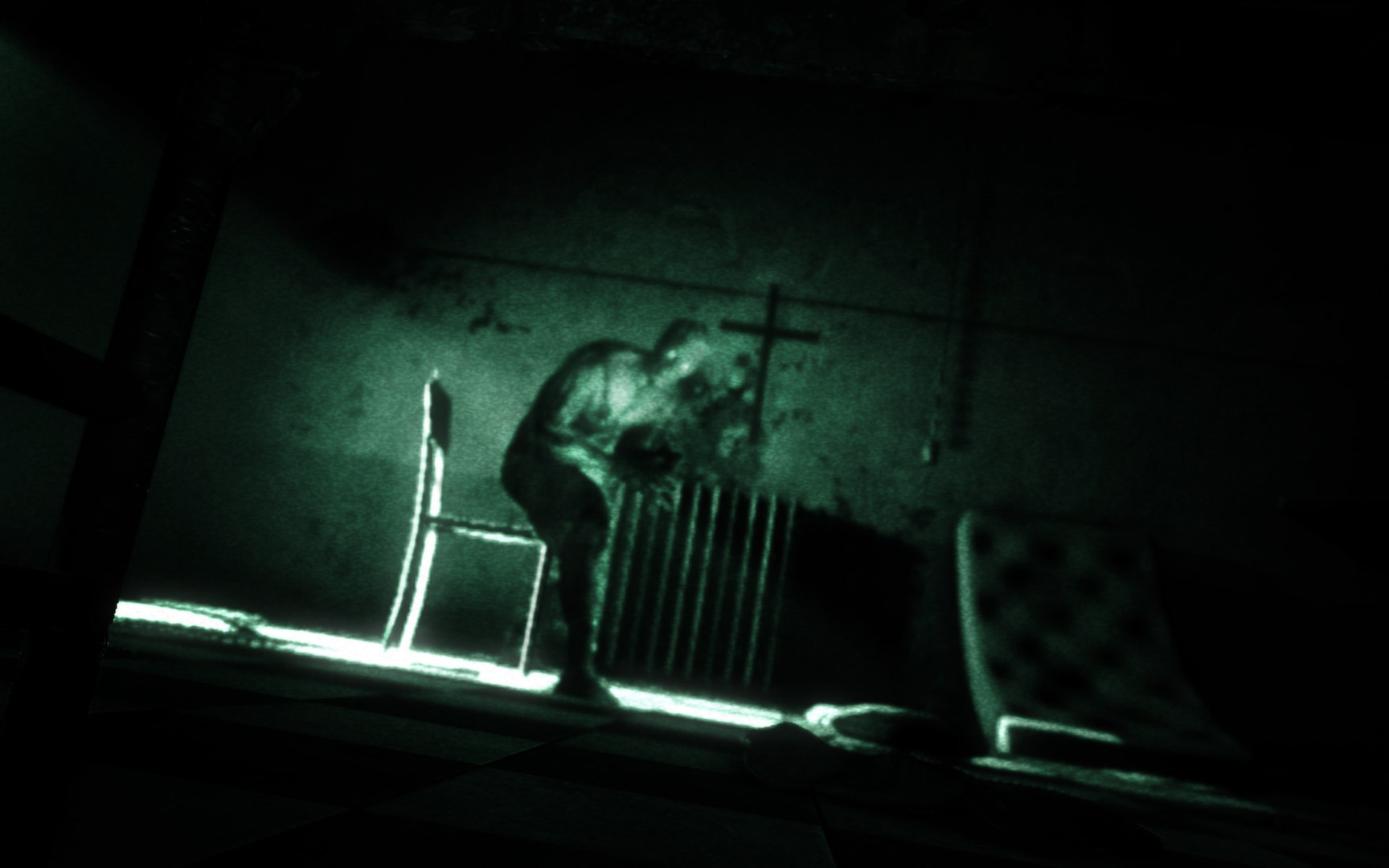
Outlast
Red Barrels · Through Miles Upshur’s eyes
Screenshot: Red Barrels
The body carries the drama
The original campaign keeps its scripted encounters and ending with Miles’s first-person viewpoint. Hands, falls, forced movement and the camcorder make the character physically present even when the player temporarily loses control.
THE STORYTELLING LESSON
A constrained viewpoint can make vulnerability tangible. A recording device inside the story adds a second frame without becoming an external camera.
Red Barrels’ game overview
CLOSE REFERENCES / DIFFERENT RULES
First-person is not always unbroken.
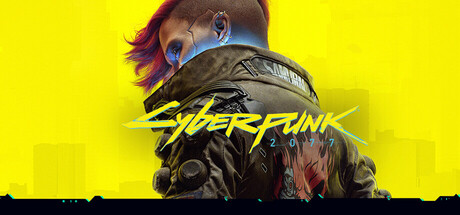
Cyberpunk 2077
Artwork: CD PROJEKT RED
Its conversations and most dramatic scenes stay in first-person, with unusually detailed body performance. Some ending scenes move to an external view of V, so it does not meet a strict “every narrative scene” test. First-person also moves between V and Johnny in parts of the story.
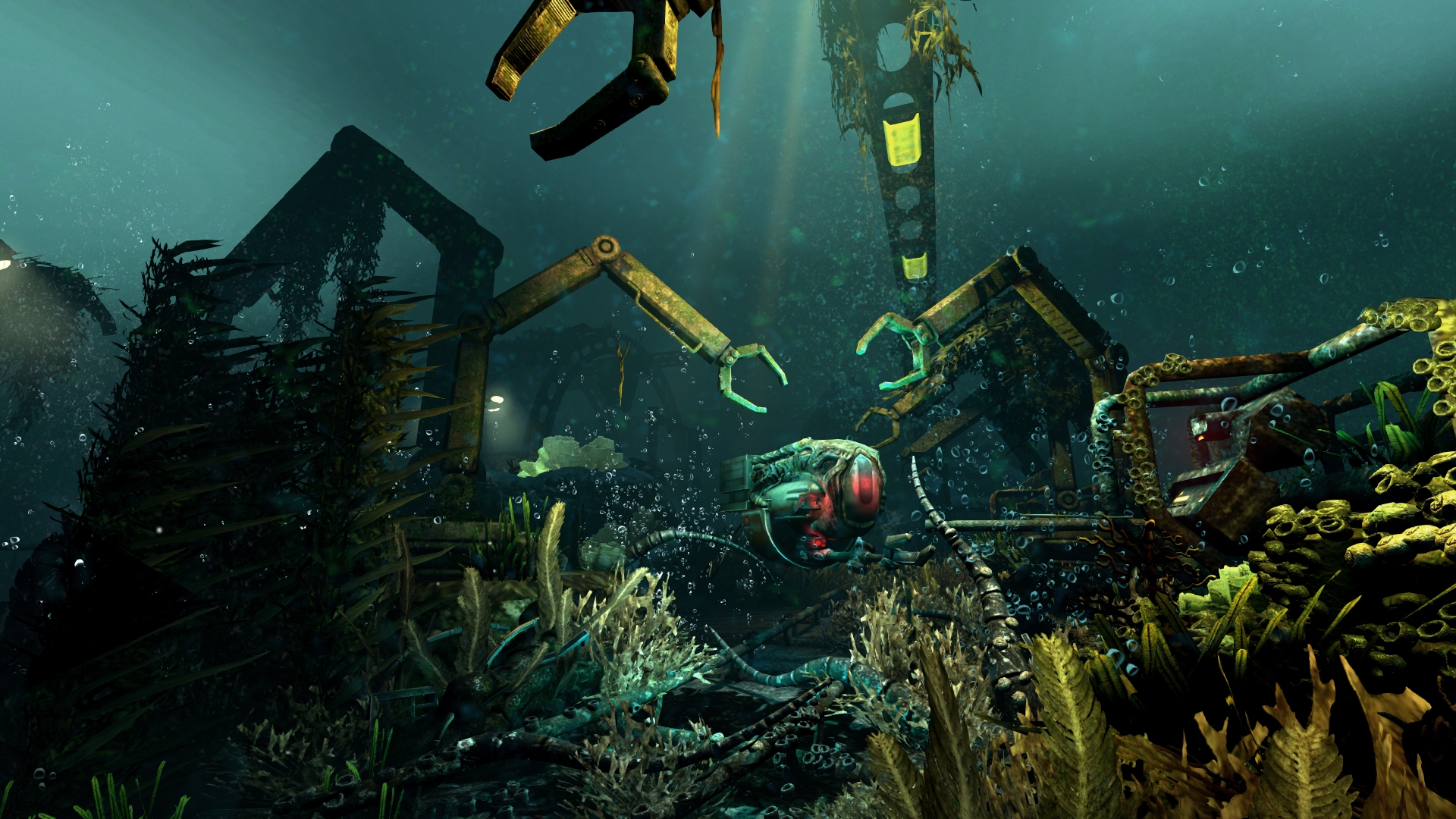
SOMA
Screenshot: Frictional Games
A major study in embodied consciousness, with first-person dialogue, scripted sequences and a first-person epilogue. However, the final presentation also includes an external view of the ARK in space. It belongs beside the strict collection as a qualified example, rather than an exception-free entry.
Frictional’s narrative design principles
A selective editorial collection, not an exhaustive catalogue. Perspective classifications are our analysis of the campaigns; linked developer material explains their design and is not a frame-by-frame certification. Plot details are kept minimal.
SOURCE MATERIAL / CLOSE READING
How characters perform for a player
The distinction is between the camera inside the campaign and the camera used to explain how that campaign was made. This developer documentary is a source for the craft discussion.
Half-Life 2: 20th anniversary documentary
Watch the performance discussion from 19:32. Consider how characters, animation and staging communicate narrative while the player remains inside the scene. The documentary itself uses conventional edited coverage.
Video: Valve · 2024
Select a preview to play the video here.
First-person storytelling is more than an FPS camera
A game can use first-person aiming while telling its major dramatic scenes through external cinematics. Another game can keep the camera inside the protagonist while temporarily removing movement or aiming. These choices affect the audience’s relationship to the character. The useful comparison is not simply “first-person versus third-person”, but what the player knows, sees and controls at each narrative moment.
Example: the same conversation, two camera systems
Imagine a protagonist meeting a friend who has concealed an important fact. In external coverage, the director can show the friend’s expression, cut to the protagonist’s reaction and reveal an object between them. In first-person, the friend can move closer, hesitate or look towards the hidden object. A hand movement, spoken response or change in breathing can express the protagonist’s reaction. Neither version automatically tells the better story; each gives the writer and animator different tools.
Why designers value a controlled cutscene
A cinematic can guarantee that an audience sees a gesture at the right moment. It can establish the scale of a battle or show several characters acting at once. It can also compress time and move between places without requiring the player to navigate the transition. That control is useful when a scene depends on precise choreography. The tradeoff is that the player may shift from acting inside the event to watching the protagonist perform it.
Why a director might stay first-person
A sustained internal viewpoint can make another character’s approach feel personal. It can turn restricted information into suspense and let an important revelation arrive at the same time for character and player. It also connects the emotional scene to the body used during play. A designer who chooses this approach accepts the challenge of making the scene readable without the usual reaction shot.
Four ways to read the campaign examples
Half-Life: look for the staging of information
During a study session, note where an event happens relative to the player. Does a sound invite you to turn? Does a character wait until you arrive? Is a practical obstacle also explaining something about the world? The narrative is not only what another character says. A room, a route and a visible consequence can perform the work that an external cinematic might otherwise do.
A useful prototype exercise is to build a room with one clear objective and one interruption. Let a character explain the task through their behaviour rather than a separate briefing screen. Ask a tester to describe what happened. If they missed the interruption, adjust the staging or add another way to understand it, rather than assuming that a loud cue alone solves the problem.
A character talking towards the player is effectively performing to the camera’s position. Their expression, pause and movement can imply a response from the protagonist even when the protagonist stays silent. Compare a scene watched attentively with the same scene while looking away. Consider which information remains understandable through sound and which information relies on the player’s attention.
For a museum or exhibition experience, this suggests a practical question: what happens if the participant arrives late or looks at something else? A guide can wait, repeat essential context naturally or reveal the information through an object as well as speech. The experience should not depend on every participant standing at one perfect spot and facing one perfect direction.
BioShock Infinite: a speaking protagonist changes the relationship
Booker’s voice lets the game communicate a character’s interpretation while keeping the camera inside his viewpoint. That gives the audience an internal position without turning the protagonist into a blank identity. Elizabeth’s performance is especially useful to study as an encounter with the player’s position. Look at how dialogue and movement make a companion feel like a person sharing the space rather than a distant instruction source.
For a first-person film, try recording two versions of a short interaction. In one, the wearer speaks only practical instructions. In the other, they express uncertainty or a personal intention. Ask a viewer how their understanding of the unseen protagonist changes. Keep the performance specific rather than adding continuous narration that explains every visible action.
Outlast: loss of control can remain embodied
A forced movement does not have to become an external shot. Visible hands, a fall or the framing of another person can make the body feel present while the player temporarily cannot act. This distinction matters when analysing cutscenes. Describe whether the viewpoint changes, whether control changes and whether the playable identity changes as separate observations.
For a safe creative exercise, stage an interruption during an ordinary task. A drawer jams, an object slips out of reach or another person asks for attention. Communicate the interruption through hand movement, sound and a settled viewpoint. The aim is to make a bodily event legible, not to imitate dangerous actions from a horror game.
Compare continuity with useful exceptions
Cyberpunk 2077 is a reference for detailed first-person scene performance, while some ending cinematics change to an external viewpoint. SOMA is a reference for embodied consciousness, with an external image in its final presentation. These exceptions can have narrative purpose. They do not erase the value of the technique, but they prevent a strict “every story scene stays inside the character” classification.
Make a perspective audit
When studying another game, record the opening, ordinary dialogue, forced actions, memories or visions, the main ending and any post-credits material. Note each camera position and any change of playable identity. Check the specific campaign and edition. Do not assume that a base game’s approach also covers its expansions, trailers or remakes. This method is more reliable than collecting titles described only as “immersive FPS games”.
Bring the technique back to a real-world story
A wearable camera can place an audience inside a task, but its wearer is not a controllable avatar. Plan the essential actions, make the objective understandable and allow enough time for the audience to recognise a change. Study POV films for composition, VR games for spatial relationships and the filming guide for practical capture. The shared lesson is to make perspective serve the story rather than treat it as a guarantee of immersion.
What to record in a study notebook
Use a short entry for each scene: camera position, available controls, spoken information, visible action and the scene’s result. Add whether an essential detail can be missed by looking away. That makes comparisons useful across a silent-protagonist game, a voiced narrative game and a wearable film. The notebook should describe what happened rather than rate “immersion” as though it were one measurable feature.
A scene that changes camera can still be emotionally strong. A scene that stays first-person can still be unclear. Assess how the chosen viewpoint serves the particular encounter and the audience’s understanding of it.