Editorial field guide4 min readUpdated 3 October 2026
Contents and media references
First-person storytelling began long before wearable cameras. Across writing, film and interactive media, it asks a recurring question: what changes when the audience experiences a world through one person?
A narrator chooses what to reveal. A camera chooses what to frame. An interactive experience chooses what you can do. Each gives the audience access to a perspective, while leaving something outside it.
Milestones in first-person storytelling
1847
A voice from the inside
Charlotte Brontë’s Jane Eyre: An Autobiography is an influential example of first-person literary narration. Jane’s account gives events their emotional meaning through her memory, judgement and voice. For a POV filmmaker, the lesson is useful: a perspective needs a character and an interpretation, as well as a view.
Read Jane Eyre at Project Gutenberg
1947
The camera becomes a character
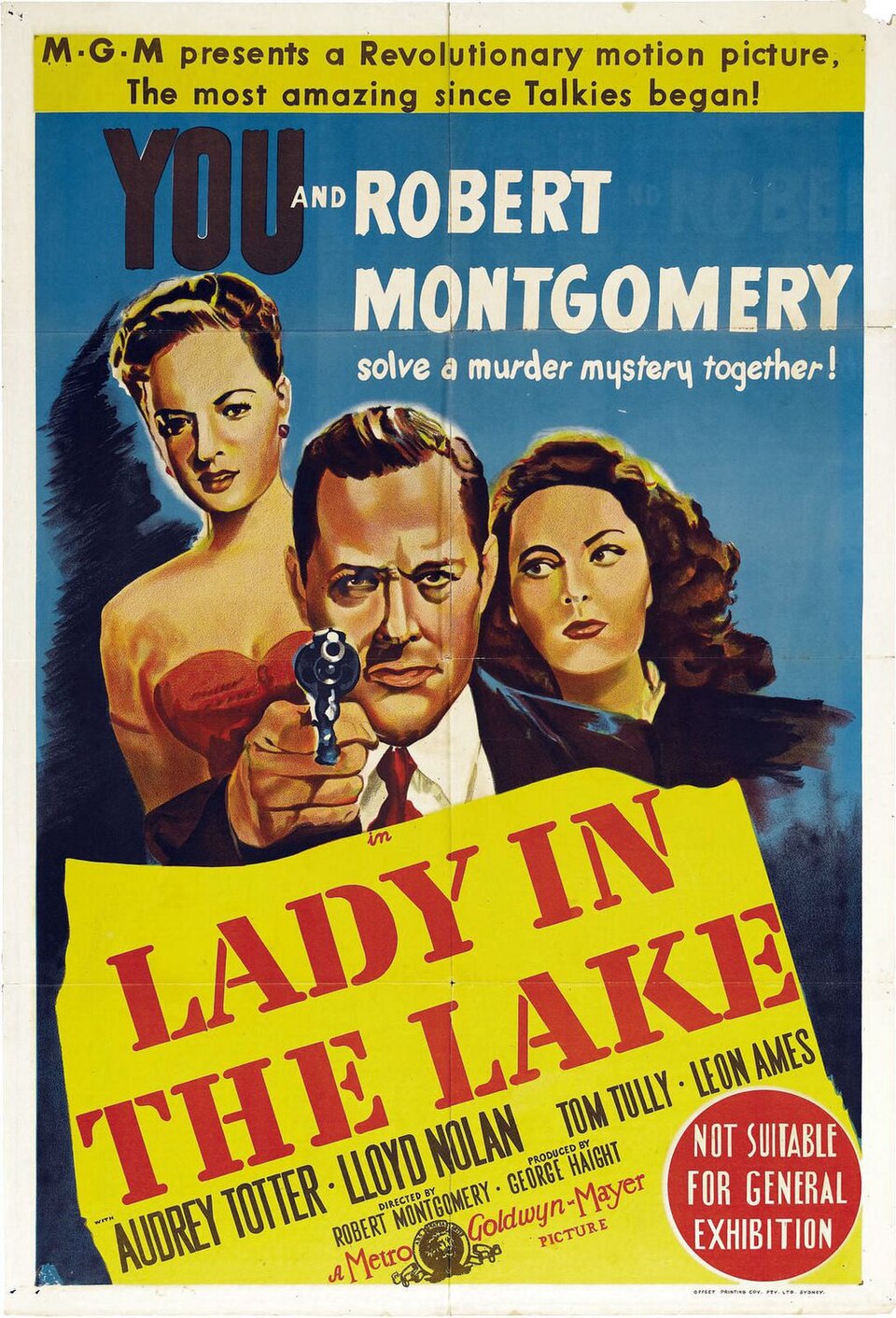
Poster via Wikipedia
Robert Montgomery’s Lady in the Lake is a notable experiment in subjective cinema, using the camera to take the detective’s viewpoint. Its technique makes perspective part of the film’s structure. Wearable filmmaking returns to that creative question: how do you sustain a story when the protagonist is mostly behind the lens?
BFI context on subjective cinema
1968
A viewpoint that responds to your head
Ivan Sutherland’s head-mounted display research explored computer-generated views that changed with the viewer’s head position. This was an early milestone in immersive computing: the image became connected to the person’s physical perspective, rather than fixed to a separate screen.
Sutherland’s 1968 report / Computer History Museum
NOW
From watching to participating
First-person games, wearable cameras and spatial interfaces offer different forms of involvement. A POV film remains an edited sequence; an interactive AR narrative can respond to where a participant stands or what they do. Our creative starting point is to design these together without confusing a recording with the experience itself.
SOURCE MATERIAL / CLOSE READING
A history of viewpoints, not just devices
Film and games offer different ways of restricting and revealing information. Compare the images, then follow the developer account of performance.
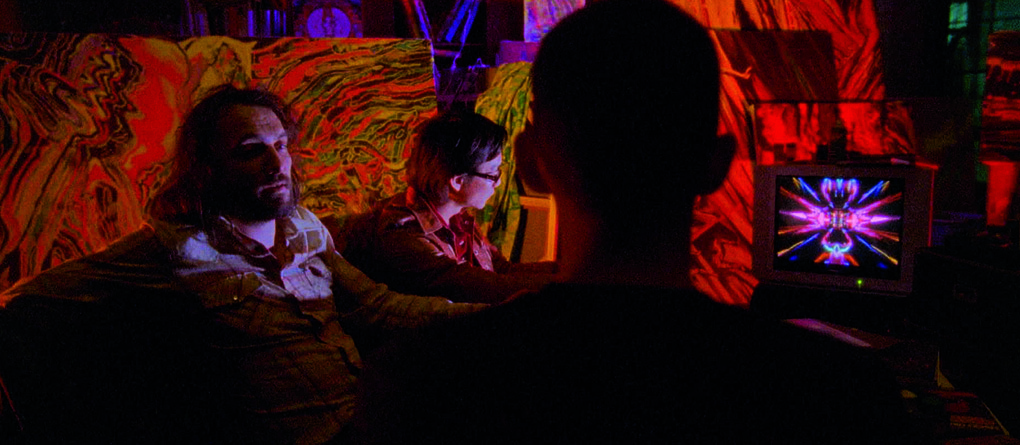
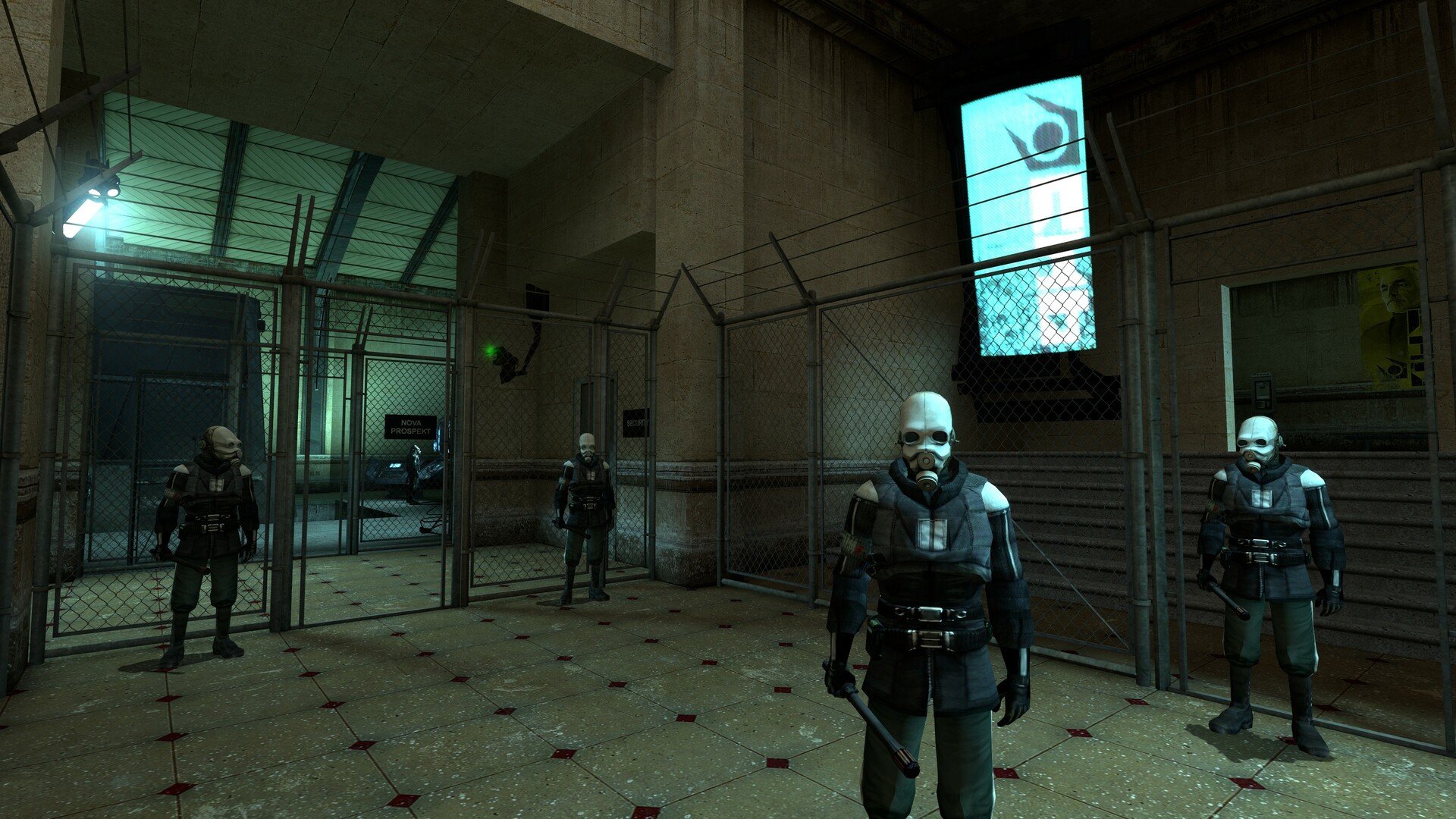
Enter the Void is a film reference for subjective perception, memory and an unstable viewpoint. Image source: Transmission Films Half-Life 2 is a game reference for staging dramatic events within the player’s environment. Image source: Valve
Half-Life 2: 20th anniversary documentary
Watch the performance discussion from 19:32. Consider how characters, animation and staging communicate narrative while the player remains inside the scene. The documentary itself uses conventional edited coverage.
Video: Valve · 2024
First-person narration, subjective camera and interactive stories
These traditions share a concern with perspective, but they do not use identical techniques. A first-person novel can explain thoughts that no camera could record. A subjective film can withhold the protagonist’s face while directing every image. A game can make the audience responsible for an action. VR can connect that action to physical movement. Understanding the differences helps a production choose which form of involvement actually serves its story.
The narrator can know more than the image
A retrospective narrator may describe an event while already knowing how it ended. A camera placed inside the event appears to discover it as it happens. Pairing the two creates a useful tension. A person might say that they misunderstood a room while the footage shows the detail they overlooked. This is a creative example of narration, rather than a claim about any particular historical work.
Cinema turns perspective into a formal rule
The film collection shows several uses of subjectivity. A detective’s restricted view can make information harder to obtain. A sustained journey can organise a story around movement through space. A floating camera can represent a state of mind rather than a literal pair of eyes. “First-person” therefore needs a description of how the camera relates to the character, not just a label.
Games turn perspective into an information system
In the Half-Life studies, story events happen around the player instead of arriving through an external cinematic camera. That changes what the player can notice and when they can notice it. A designer must make important events legible while allowing the player to look and move. The challenge resembles directing a real participant through an exhibition.
Wearable storytelling returns the question to real places
A wearable camera documents a physical encounter. AR can attach another layer to that encounter. VR builds a different environment around the participant. Each medium needs its own explanation of what is recorded, simulated or interactive. The common question is whose experience the audience follows and what the chosen form lets them understand.