Editorial field guide3 min readUpdated 3 October 2026
Contents and media references
Four starting points for a POV story
01
A maker’s process
Follow an object from parts to working prototype. POV makes the hands and decisions visible; an AR layer could explain a component at the moment it matters.
02
A place with a memory
Build a first-person route through a museum, street or exhibition. A digital fragment can connect a physical location to another time, a character or an unheard voice.
03
A product in use
Show what someone actually does with a product. A clear task and visible outcome can communicate more than a detached beauty shot. Keep any simulated capabilities explicit.
04
A story you participate in
Let an action reveal the next scene. The resulting POV film documents a journey; the interactive AR experience lets another person take that journey for themselves.
Creative directions for development, rather than recordings or finished case studies.
AUGMENTED REALITY / STORY IN PLACE
A physical route can organise an AR story
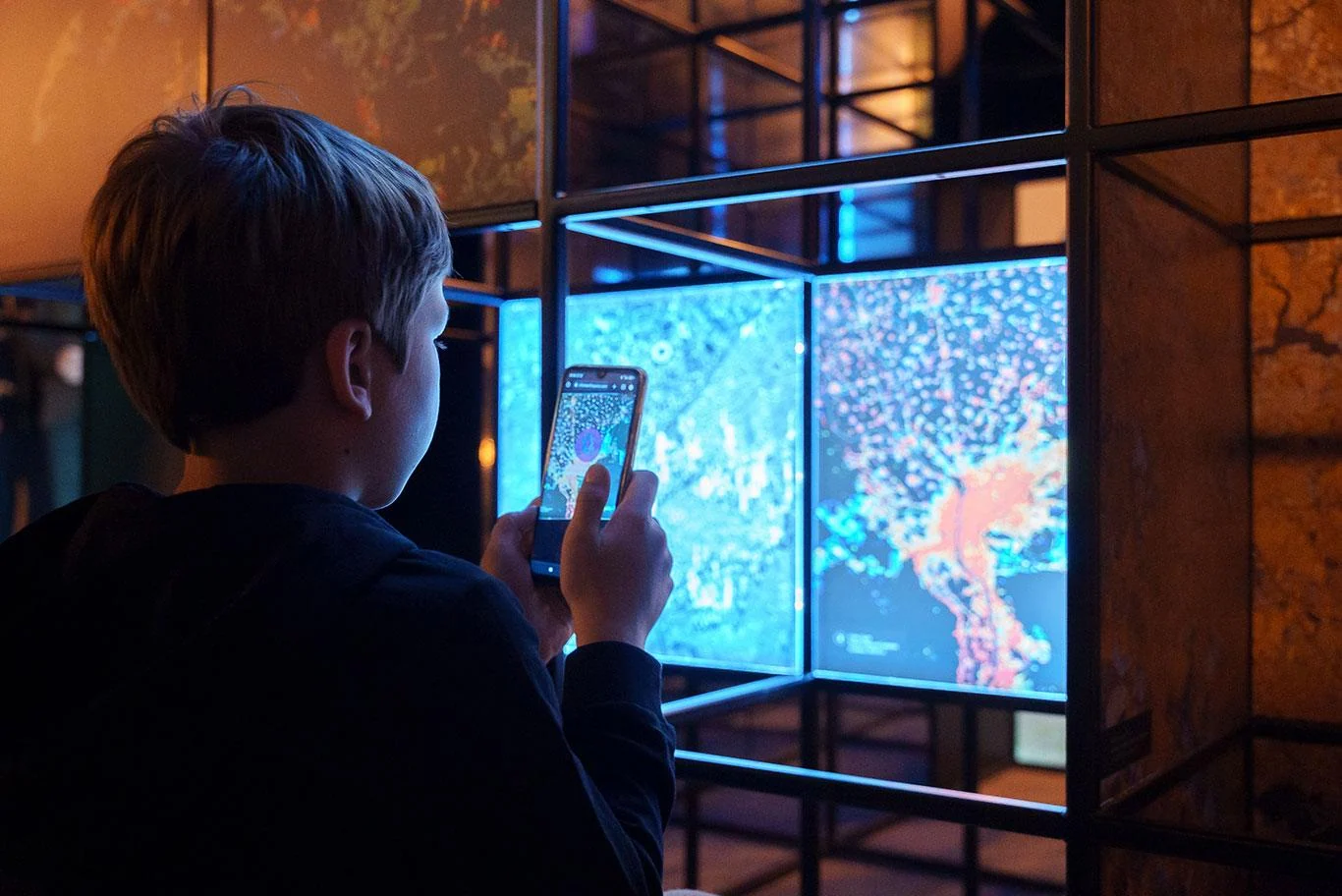
Munchingsquare’s Direction Earth/Space added smartphone AR to a city-wide exhibition about satellite observation. A visitor encounters a physical display, then uses their phone to reveal another layer of information. That relationship offers a useful starting point for the museum and guided-route ideas on this page.
For a new concept, identify what each stop reveals and why the visitor would continue. Film one participant’s route to document it, and design the interactive version around the choices another visitor can make.
More POV video ideas with a clear narrative
The most useful idea contains an action, a reason to care and an outcome. “A day in my life” is a broad category. “Can I find the missing ingredient before the market closes?” gives the day a direction. Develop the specific question before choosing the camera or adding augmented graphics.
A chef’s final preparation
Follow one dish from a prepared workspace to service. Use POV for hand movements and decisions, then a supporting view for the finished plate. The story could focus on recovering from a small mistake or coordinating with another person. An illustrative AR layer might identify ingredients, but it should not obscure the action it is meant to explain.
A museum object with two histories
Begin with the visitor encountering an object. Introduce one visible detail, then connect it to a recorded memory or archive fragment. End by returning to the physical object with a changed interpretation. The experience could be an edited film, an interactive location-based story or both, with the outputs described separately.
An unboxing that tests a claim
Instead of showing packaging alone, ask whether the object performs one useful task. Establish the claim, show the setup and demonstrate the result. Keep a simulated feature distinct from a recorded capability. The viewer should be able to tell which part is evidence and which part is a proposed experience.
A rehearsal from inside the performance
Follow a performer learning one movement or responding to another performer’s cue. Hands, breathing and sound can communicate preparation. Use supporting views where the full body matters. The ending might show a successful exchange rather than a polished final show, giving the rehearsal its own narrative payoff.
A guided route with a decision
Design a short route where the participant chooses between two clues. Each path can reveal a different detail before returning to a shared destination. Film one participant’s journey as documentation, but describe the interactive version as a separate experience. A recording of a choice is not itself a branching story for the viewer.